The "I Know Nothing About Flowers" Guide
The Quick Guide
Focus on the vibe, not the variety: You don’t need to know the flower names; you just need to know how you want your wedding to feel
The three main types: Think about whether you’re looking for personal flowers, ceremony flowers, reception flowers, or a combination of all three
Balance your budget with your expectations: Wedding flowers probably cost more than you think they will, so keep an open mind when starting to plan what you. want
- The right florist shouldn’t be intimidating: A good wedding florist will be able to guide you through and demystify the process
Almost every couple we speak with at British Flower Market starts with the same apology: “I’m so sorry, I actually know nothing about flowers.”
If that’s you, here’s a secret: That is perfectly okay.
You don’t need to know the Latin names of the flowers (or the English ones for that matter), it’s ok if you haven’t got the exact, technical words to describe what you want your bouquet to look like, and you certainly don’t need to be across the trends in floristry. In fact, some of the most stunning weddings happen when a couple provides a “feeling” and lets a professional expert handle the specifics.
Here is how to navigate your wedding flowers without the stress.
Focus on the General Look and Feel
Forget Flower Names
Florists don’t expect you to walk into a consultation knowing the difference between a dahlia and a zinnia. In fact, getting fixated on one specific flower can often limit your florist’s creativity. Instead, the best way to get a result you love is to describe the texture and mood you want to create.
Think about which of these “vibes” resonates with you:
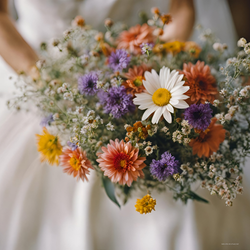
Do you like “Movement”? Think of “dancing” stems, wispy grasses, and a bouquet that looks like it was gathered from a meadow ten minutes ago. This is for the couple who wants their flowers to feel alive, airy, and a bit “wild”—perfect for outdoor ceremonies or relaxed marquee receptions.
Do you like “Structure”? This is about clean lines, symmetrical shapes, and a timeless, formal feel. Think of lush, rounded bouquets and architectural table arrangements. If your wedding is in a grand city hotel or a classic manor house, a structured look often provides that “stately” elegance.
- Do you like “Scent”? This is the “secret sauce” of high-end wedding floristry. While many mass-produced flowers are bred strictly for longevity, a specialist florist knows exactly which varieties to choose to create that incredible, nostalgic scent—think garden-style roses, sweet peas, or aromatic herbs like mint and rosemary. This is about more than just a look; it’s about a fragrance that will instantly transport you back to your wedding day for years to come.
The Seasonality Reality
An important thing to keep in mind is that the natural world has a very strict schedule. Whether you are looking for British-grown stems or high-quality imported flowers, you simply cannot get every variety all year round.
Trying to “force” a flower out of its natural window often leads to disappointment, either in price or quality.
The “short window” flowers: Some of the most iconic wedding blooms have very specific seasons. Peonies, for example, have a famously short window and simply aren’t available outside of that time. The same applies to tulips, ranunculus, and many other delicate spring favourites.
The “off-season” quality gap: While some flowers, like certain types of roses, are available year-round if they are imported, many others either aren’t available at all or are significantly lower quality when they are “off-season.”
To avoid disappointment try to avoid getting too fixated on one specific type of flower or foliage. Instead, share your overall vision with your florist and trust them to find the best seasonal equivalent. They are market experts who know how to source the “next best thing”—the flower that is at its absolute peak of freshness and quality on your specific wedding date.
Making Sure Flowers Fit
Your flowers don’t live in a vacuum; they live in your venue. When talking to your florist, think about the scale and surroundings:
The venue architecture: Are you in a soaring stone cathedral or an intimate wood-panelled dining room? Your flowers need to be proportionate to the space. Huge, dramatic “clouds” of flowers look incredible in a marquee but might overwhelm a small country church.
The outfits: It’s incredibly helpful to show your florist what you and your party are wearing. The texture of a delicate lace dress might call for soft, romantic textures, while a sharp, modern tuxedo might suit a more architectural, “clean” floral look.
The human element: Think about how people will move. If you want high-impact table arrangements, ensure they are either low enough to talk over or high enough to see under.
Overall, it tends to work best if you give your florist the “mood,” the “venue,” and the “vibe,” and then let them use their expertise to choose the specific stems that will look (and smell) best on your specific date.
The Three-Part Wedding Map
To keep your budget and your planning organized, it helps to think of your wedding flowers in three distinct categories. This allows you to prioritize where you want the most visual impact without feeling overwhelmed by a massive list of requirements.
The Personals: Flowers You Carry and Wear
These are the most intimate flowers of the day and will likely be in more of your close-up photographs than anything else.
This category includes the bridal bouquet, bridesmaid posies, and floral hair accessories, as well as buttonholes for the suits and corsages for the family. Because these stems are held or worn, they need to be sturdy enough to last the day without a water source, yet delicate enough to complement the textures of your wedding attire.
Many couples choose to make the bridal bouquet the “hero” piece of this category, using it as the blueprint for the entire wedding’s colour palette and style.
The Ceremony: The "I Do" Backdrop
The ceremony is the emotional heart of your wedding, and the flowers here serve to frame the moment you exchange vows.
This category can range from subtle accents, like simple clusters of flowers on the ends of pews or chairs, to “meadows” of stems that appear to be growing directly out of the aisle floor. If you are looking for a high-impact “wow” factor, this is often where you might place a grand floral arch or a deconstructed installation around an altar or doorway.
A great tip for being budget-conscious is to ask your florist which of these ceremony elements can be “repurposed” and moved to the reception after the vows are finished.
The Reception: Setting the Scene for the Party
This is where you and your guests will spend the majority of your time, and the flowers here set the mood for the celebration.
The reception category covers everything from the centrepieces on your dining tables to bud vases scattered along the bar or lounge areas. If your venue has high ceilings or large open spaces, you might consider “cloud” installations hanging from the rafters to fill the vertical space.
Whether you opt for a few statement arrangements or a series of smaller, more intimate clusters, these flowers should encourage conversation and reflect the overall “vibe” of your party, right down to the delicate stems decorating your wedding cake.
Balancing Vision and Budget
Now that you are likely dreaming of cascading aisle meadows and ceiling-high “cloud” installations, we have to talk about the practical side of the day. Budget is the single most important factor in your planning, but it is also the one that causes the most anxiety.
The Reality Check: It Costs More Than You Think
The simple, and often surprising, truth is that professional wedding flowers probably cost more than you initialy expect. This is true for almost every couple we speak to.
This isn’t about “wedding markups”; it’s about the sheer volume of labour, expertise, and high-quality materials required to create a professional look. To help you get a head start on the numbers, we have created two essential deep-dive guides:
BFM: Your "Voice of Reason"
At British Flower Market, we act as your floral sounding board. Our role is to ensure your expectations and your investment are perfectly aligned before you even sit down for a consultation.
If there is a mismatch between your “wish list” and your budget, we will tell you. Rather than letting you find out weeks later, we will guide you on what a realistic minimum spend would be to achieve the look you’re after. This isn’t about telling you how to spend your money—it’s about giving you the correct starting point so you can move forward with confidence.
The Next Step: The Expert Match
Once we have established a realistic baseline, we don’t just give you a list of names; we find your perfect match. This selection is carefully based on your preferred style, your wedding date, and the availability of our specialists.
We’ll introduce you to a florist from our network who truly “gets” your vision. These experts act as your ultimate guide through the floral journey—explaining every part of the process, navigating the seasonal shifts, and using their artistry to make the absolute most of your budget. By working with a vetted professional who understands your goals, you can relax knowing you’ll end up with the wedding flowers of your dreams