Description
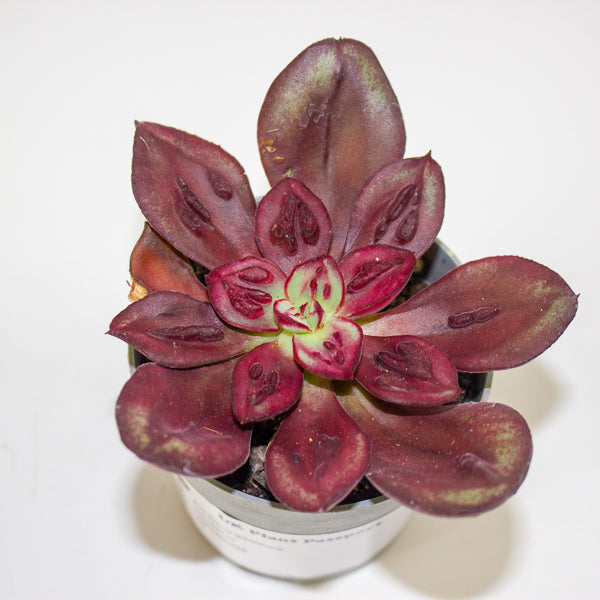
Echeveria gibbiflora is a stunning rosette-forming succulent known for its large, wavy leaves that develop pink and purple tones in bright sunlight. This species is both bold and low-maintenance, perfect for warm, sunny spots indoors or out.
- Full Botanical Name: Echeveria gibbiflora
- Common Names: Gibbiflora Echeveria, Large Echeveria
- Country and/or Region of Origin: Central America (Mexico, Guatemala)
- Growing Conditions in Native Habitat: Arid and semi-arid regions with high light and sandy, fast-draining soils
- Care Guide:
- Light: Full sun to bright, indirect light; stronger light enhances colour
- Ideal Room: South or west-facing windowsill, sunroom, or conservatory
- Feeding: Low-strength cactus feed every 6–8 weeks in spring–summer
- Humidity: Low; prefers dry air
- Ideal Temperature: 18–30°C; protect from frost
- Watering: Allow soil to dry completely before watering; reduce drastically in winter
- Pet/Child Safe: Non-toxic (genus level) — generally safe for pets and humans, though ingestion may cause minor stomach upset
- Soil Type: Free-draining cactus mix with added grit or perlite
- Propagation: Leaf cuttings, offsets, or seed
- Eventual Height and Spread: Up to 30 cm tall; rosettes 25–40 cm wide
- Growth Rate: Moderate to fast in bright light
- Pests and Treatment: Mealybugs or aphids on flower stems; treat with neem oil
- Repotting: Every 2–3 years into fresh, dry mix
- Pruning: Remove old lower leaves and spent blooms
- Air Purification: Mild; improves indoor air by storing carbon dioxide
- Folklore: In Mexico, Echeveria are regarded as symbols of endurance and grace