Description
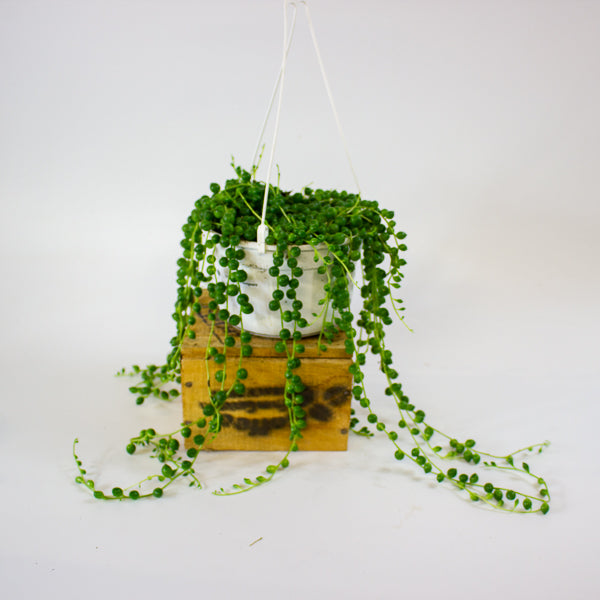
Senecio rowleyanus, commonly known as String of Pearls, is a fascinating trailing succulent with perfectly round, bead-like leaves that resemble a string of green pearls. It’s a beautiful, sculptural plant ideal for hanging baskets and sunny shelves, known for its drought tolerance and unique texture.
- Full Botanical Name: Senecio rowleyanus
- Common Names: String of Pearls, Bead Plant, Rosary Vine
- Country and/or Region of Origin: Native to Southwest Africa
- Growing Conditions in Native Habitat: Found trailing across rocky desert floors and cliffs, where it stores water in its round leaves to survive arid conditions
- Care Guide:
- Light: Bright, indirect light or filtered sunlight; can tolerate some morning sun
- Ideal Room: Conservatory, kitchen, or sunny windowsill
- Feeding: Succulent fertilizer every 6–8 weeks in spring and summer
- Humidity: Prefers low humidity; do not mist
- Ideal Temperature: 18–27°C; protect from frost below 10°C
- Watering: Allow soil to dry completely between waterings; water sparingly in winter
- Pet/Child Safe: Toxic (species level) — contains pyrrolizidine alkaloids that cause vomiting, lethargy, and diarrhea if ingested by pets or humans
- Soil Type: Gritty, fast-draining succulent mix with sand or perlite
- Propagation: Stem cuttings easily root in soil or water
- Eventual Height and Spread: Trails 50–100 cm long
- Growth Rate: Moderate; faster in bright light and warmth
- Pests and Treatment: Watch for mealybugs and aphids; treat with neem oil or insecticidal soap
- Repotting: Every 2–3 years with fresh, well-draining soil
- Pruning: Trim trailing stems to maintain shape or encourage denser growth
- Air Purification: Minimal; primarily decorative
- Folklore: Said to bring prosperity and abundance due to its “string of pearls” appearance symbolizing wealth